
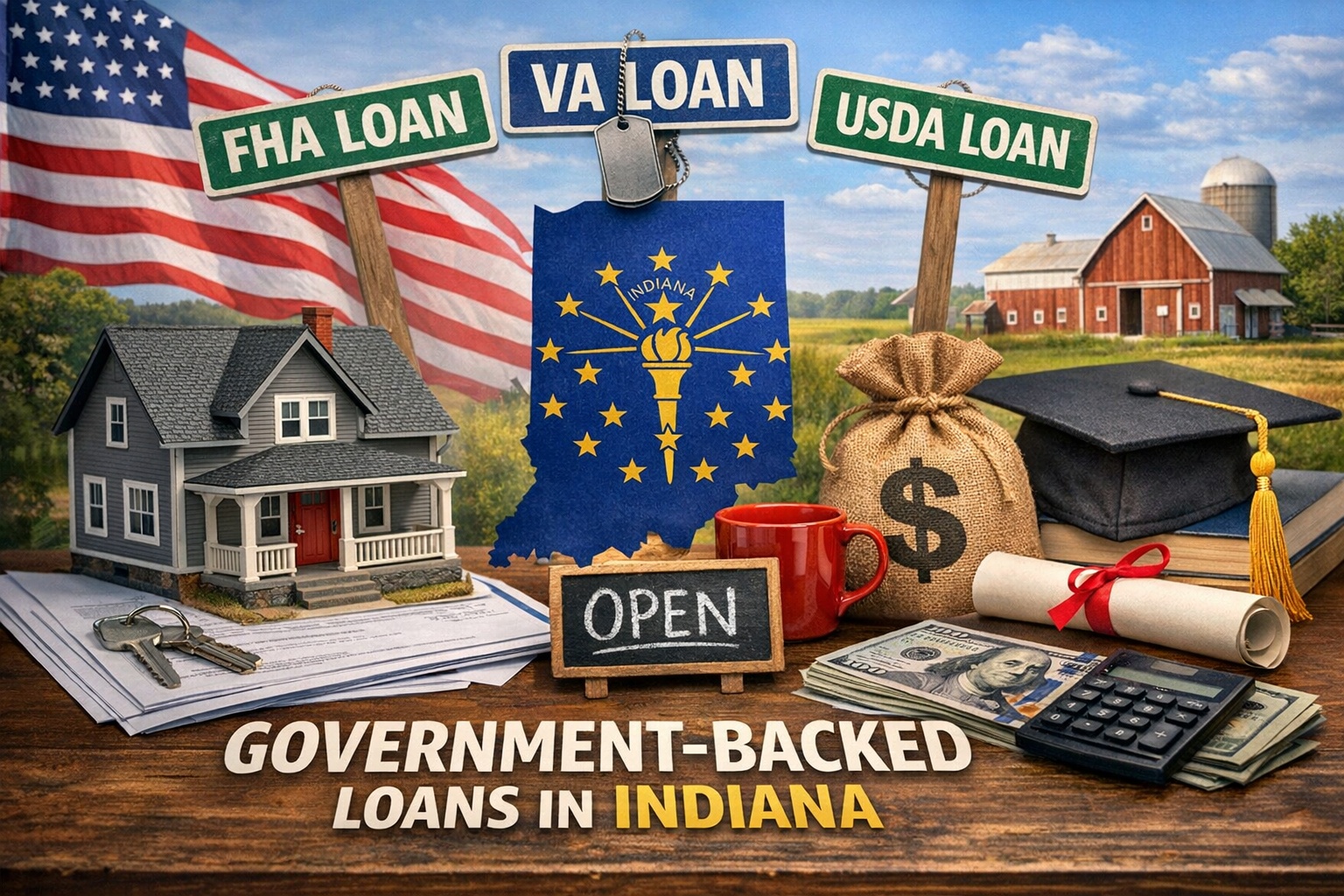
If you’re living in Indiana and thinking about buying a home, starting a business, or going back to school, you’ve probably heard about government-backed loans. But what exactly are they—and are they right for you?
Let’s break it down in simple terms.
Government-backed loans are loans supported by federal or state agencies. That backing reduces the risk for lenders, which makes it easier for everyday Hoosiers like you to qualify—especially if your credit isn’t perfect or you don’t have a huge down payment saved up.
In this guide, we’ll walk through the most common types of government-backed loans in Indiana, who they’re best for, how to qualify, and what to watch out for.
Table of Contents
What Is a Government-Backed Loan?
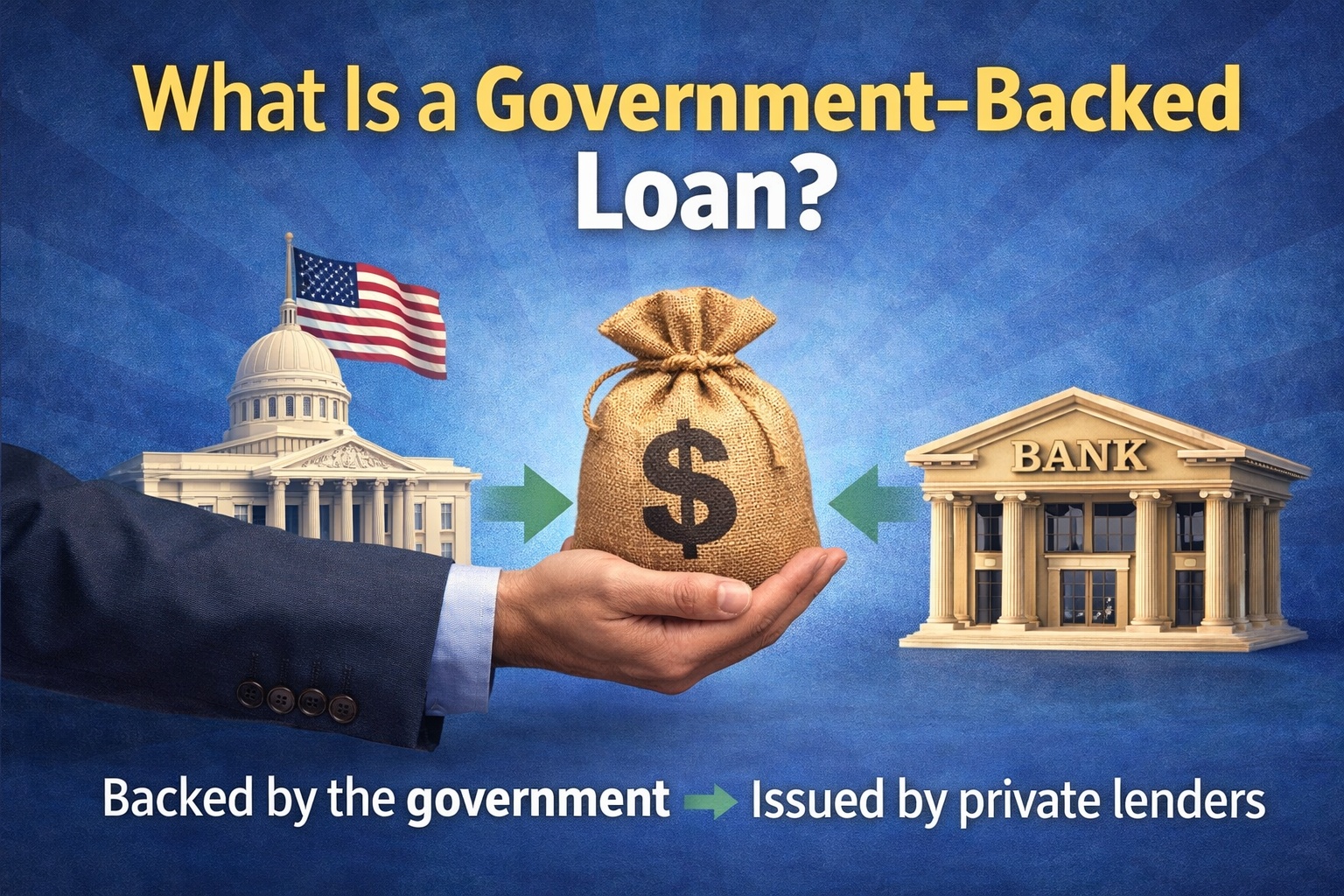
A government-backed loan isn’t issued directly by the government in most cases. Instead, private lenders (like banks or credit unions) provide the money, and a government agency guarantees part of the loan.
Why does that matter to you?
Because it often means:
- Lower down payments
- More flexible credit requirements
- Competitive interest rates
- Easier approval compared to conventional loans
If you’ve ever felt like traditional lenders make borrowing feel impossible, government-backed loans can open doors.
Government-Backed Home Loans in Indiana
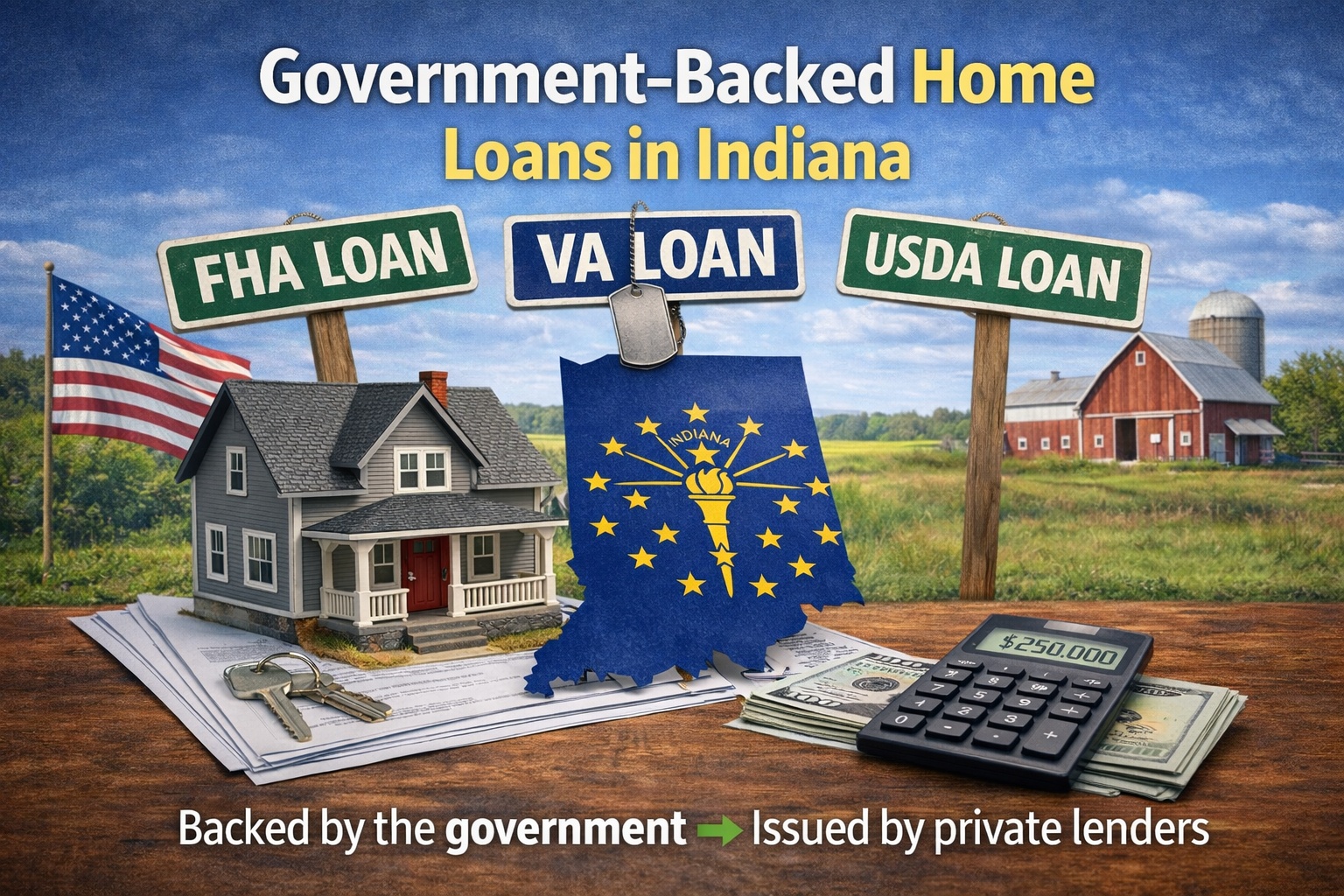
Buying a home in Indiana? These are the most popular programs you should know about.
1. FHA Loans (Federal Housing Administration)
FHA loans are one of the most common government-backed mortgage options in Indiana, especially for first-time homebuyers.
Why people love FHA loans:
- Down payments as low as 3.5%
- Lower credit score requirements (often 580+ for maximum financing)
- Flexible qualification standards
Imagine this: You’ve been renting in Indianapolis for years, paying $1,400 a month. You’ve saved some money—but not $30,000 for a conventional down payment. An FHA loan could allow you to buy a modest home with far less upfront.
That’s a game-changer.
Keep in mind: FHA loans require mortgage insurance premiums (MIP), which adds to your monthly cost. But for many buyers, it’s still worth it to get into a home sooner.
2. VA Loans (For Veterans and Active-Duty Service Members)
If you’re a veteran or active-duty military member living in Indiana, VA loans are one of the best benefits available to you.
Major advantages:
- No down payment required
- No private mortgage insurance (PMI)
- Competitive interest rates
- Limited closing costs
From Fort Wayne to Evansville, VA loans help military families buy homes with less financial stress.
For example, if you qualify for a $250,000 home loan, you may not need to put a single dollar down. That’s powerful.
3. USDA Loans (Rural Development Loans)
You might be surprised to learn that many areas in Indiana qualify as “rural” under USDA guidelines—even some suburbs.
USDA loans are ideal if you’re buying in smaller towns or less densely populated areas.
Why USDA loans stand out:
- Zero down payment
- Reduced mortgage insurance costs
- Designed for low-to-moderate income borrowers
If you’re looking at property outside of cities like Indianapolis or South Bend, you may qualify.
These loans are specifically designed to promote rural development—so they’re perfect if you’re planning to settle down in Indiana’s quieter communities.
Indiana Housing and Community Development Authority (IHCDA) Programs
Indiana also offers state-level assistance through the Indiana Housing and Community Development Authority (IHCDA).
These programs can provide:
- Down payment assistance
- Closing cost assistance
- First-time homebuyer support
Let’s say you qualify for an FHA loan but don’t have enough saved for the down payment. An IHCDA assistance program might help bridge that gap.
That could mean the difference between continuing to rent and finally owning your own home.
Government-Backed Business Loans in Indiana
Thinking about launching a small business in Indiana? Or expanding one you already run?
The U.S. Small Business Administration (SBA) offers government-backed loans that make financing more accessible.
SBA 7(a) Loans
This is the most common SBA loan program.
You can use it for:
- Starting a business
- Buying equipment
- Refinancing debt
- Working capital
The SBA guarantees a portion of the loan, which encourages lenders to approve businesses that might otherwise struggle to get financing.
Imagine you’re opening a coffee shop in Bloomington. Traditional banks might hesitate if you’re new to entrepreneurship. An SBA-backed loan could improve your chances significantly.
SBA Microloans
Need less funding?
Microloans are designed for smaller borrowing amounts—often under $50,000.
They’re ideal for:
- Home-based businesses
- Startups
- Entrepreneurs with limited credit history
Indiana has several nonprofit lenders that partner with the SBA to distribute these funds.
Government-Backed Student Loans in Indiana
Higher education is expensive. Whether you’re attending Indiana University, Purdue, or Ivy Tech, federal student loans are technically government-backed loans too.
These include:
- Direct Subsidized Loans
- Direct Unsubsidized Loans
- PLUS Loans
Federal loans typically offer:
- Fixed interest rates
- Income-driven repayment plans
- Forgiveness options in some cases
Before turning to private student loans, it’s almost always smart to explore federal options first.
Who Qualifies for Government-Backed Loans in Indiana?
Eligibility depends on the specific program, but here are common factors lenders consider:
- Credit score
- Income level
- Debt-to-income ratio (DTI)
- Employment history
- Property location (for USDA)
- Military service (for VA loans)
The good news? Requirements are often more forgiving than conventional loans.
That’s the whole point.
When You Might Need Short-Term Financial Help
While government-backed loans are excellent for large financial goals like buying a home or starting a business, they aren’t designed for emergency cash needs.
If you’re dealing with unexpected expenses—like medical bills or car repairs—you may need a different solution.
Government-backed loans are long-term tools. Short-term lenders serve a different purpose.
Knowing the difference can protect your financial health.
Pros and Cons of Government-Backed Loans
Before you apply, let’s look at both sides.
Pros
- Easier qualification standards
- Lower down payment requirements
- Competitive interest rates
- Flexible credit guidelines
- Government oversight for borrower protection
Cons
- Mortgage insurance costs (FHA, USDA)
- Funding fees (VA loans)
- Property eligibility restrictions
- Income caps (USDA and some state programs)
- More paperwork in some cases
No loan is perfect. It’s about finding what fits your situation.
Tips Before Applying for a Government-Backed Loan in Indiana
Here are some practical steps you can take right now:
1. Check Your Credit Score
Even though requirements are flexible, a higher credit score can get you better terms.
2. Calculate Your Debt-to-Income Ratio
Add up your monthly debts and divide by your gross monthly income. Many programs prefer a DTI under 43%.
3. Compare Lenders
Not all lenders offer the same rates—even for FHA or VA loans.
Shop around.
4. Ask About Assistance Programs
Especially in Indiana, state-level programs can make a big difference.
5. Understand the Total Cost
Look beyond the interest rate. Consider:
- Closing costs
- Insurance
- Fees
- Long-term payment obligations
Are Government-Backed Loans Right for You?
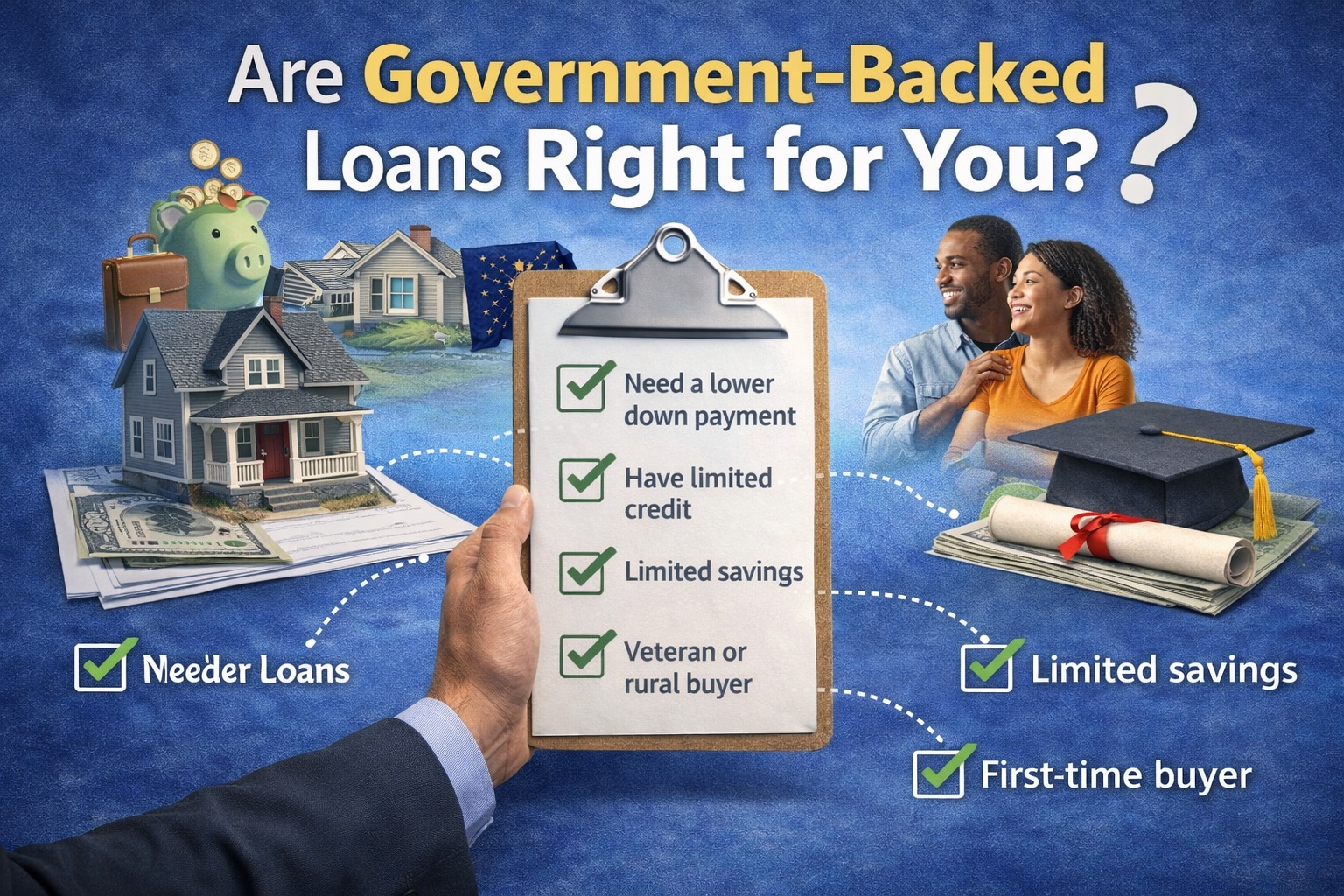
If you:
- Have limited savings
- Don’t have perfect credit
- Want lower down payment options
- Qualify for special programs (veteran, rural buyer, first-time buyer)
Then yes—they’re absolutely worth exploring.
If you’re in Indiana, these programs exist specifically to help people like you access homeownership, education, and entrepreneurship opportunities.
Final Thoughts
Government-backed loans in Indiana can be powerful financial tools. Whether you’re buying your first home, starting a small business, or funding your education, these programs are designed to reduce barriers and expand opportunity.
The key is doing your homework.
Understand your goals. Compare your options. And choose the loan that fits your long-term financial plan—not just your immediate needs.
If you’re ready to move forward, consider speaking with a local lender who specializes in FHA, VA, USDA, or SBA loans. A short conversation could change your financial future.
And remember—you’re not alone in this. Thousands of Indiana residents use government-backed loans every year to build better financial stability.
You could be next.